You’re texting a friend, everything seems normal, and suddenly they reply:
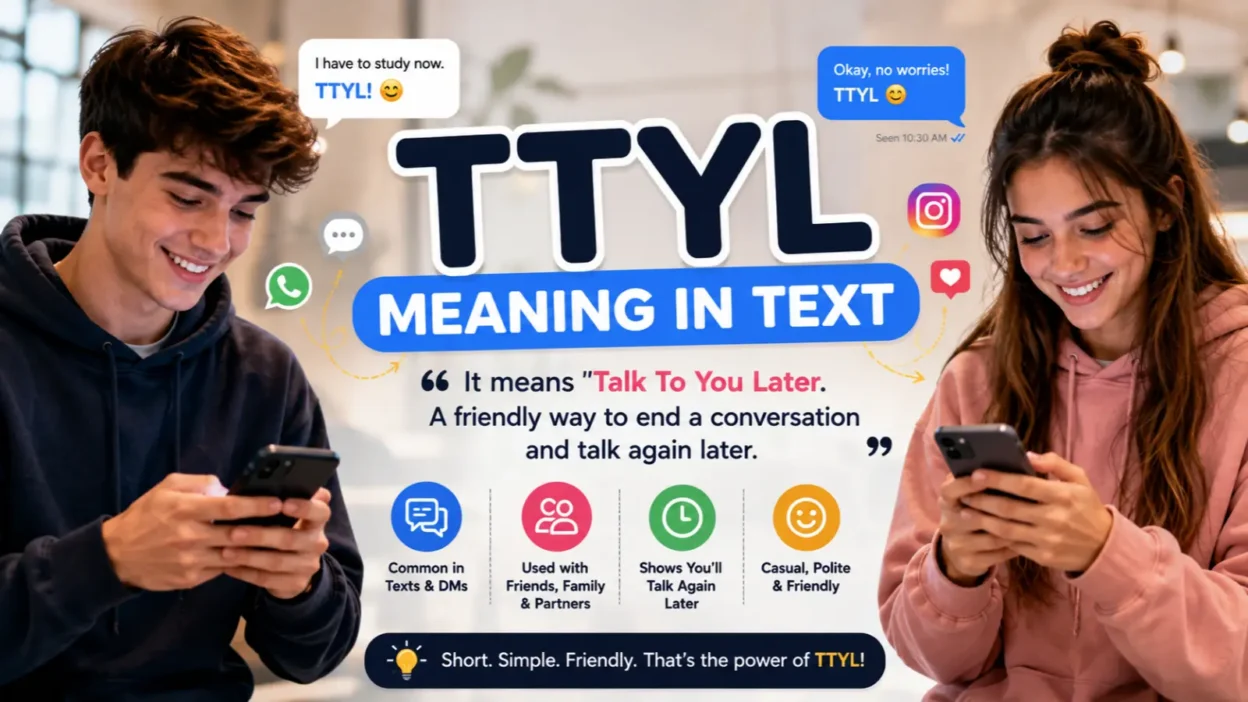
Friend: “I have to finish some work. TTYL 😊”
You pause for a second.
Does TTYL mean they’re ending the conversation forever? Are they upset? Or are they simply busy?
This small four-letter abbreviation appears millions of times every day across WhatsApp, Instagram, Snapchat, Messenger, Discord, and gaming chats.
Yet many people still search for TTYL meaning in text because its tone depends heavily on the relationship, the conversation, and even the emoji that follows.
While the phrase itself is simple, its emotional meaning can range from friendly and caring to casual or even slightly dismissive depending on context. Understanding how people actually use TTYL helps you read conversations more naturally and avoid overthinking everyday messages.
Quick Definition & Meanings
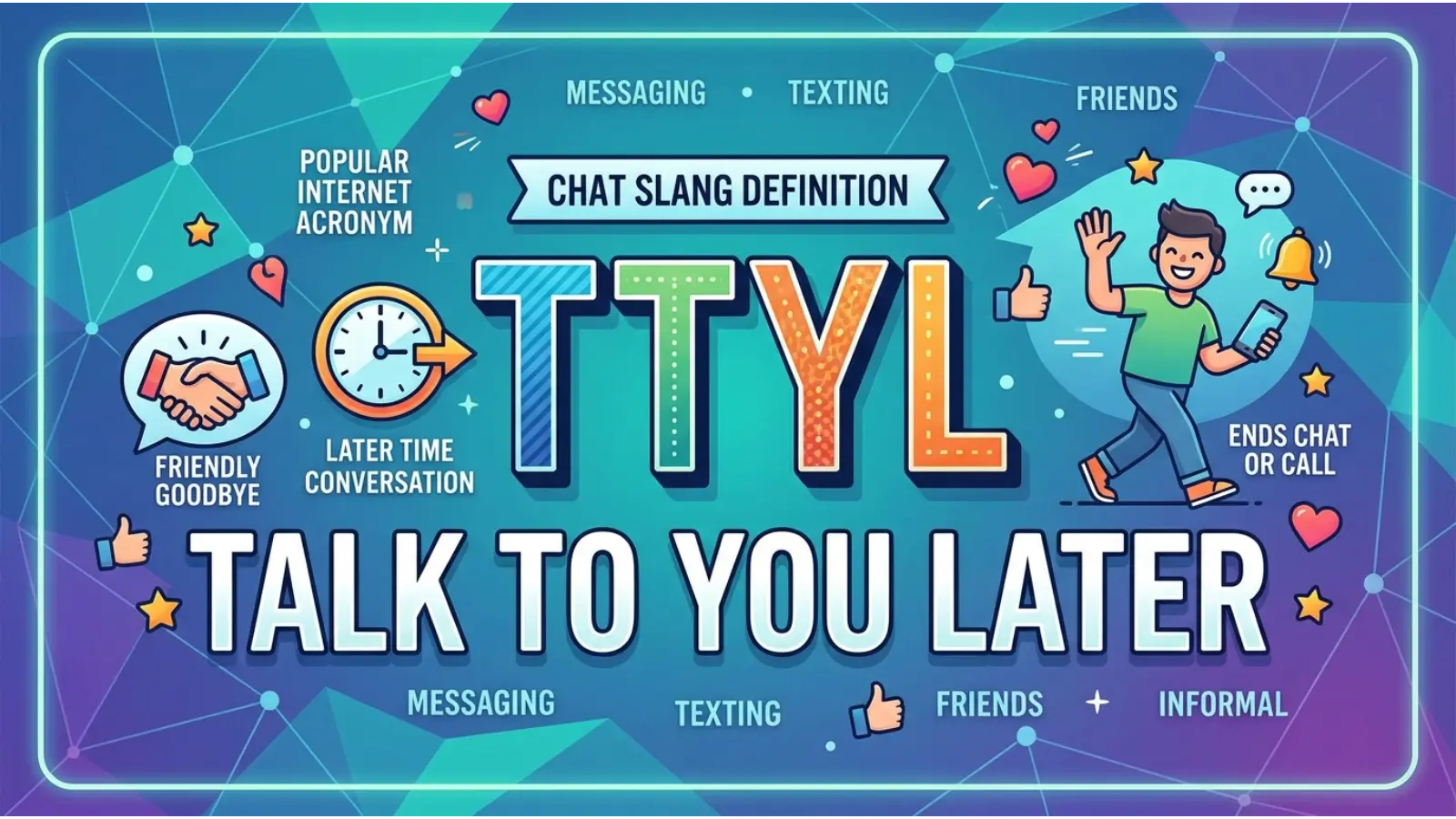
TTYL stands for “Talk To You Later.”
It’s an informal internet abbreviation used to politely end a conversation while suggesting you’ll continue talking another time. Rather than saying goodbye permanently, it leaves the door open for future communication.
TTYL as a Friendly Goodbye
This is the most common meaning.
People use TTYL to end chats without sounding cold.
Example:
“I’m heading to class. TTYL!”
Tone: Warm, casual, positive.
TTYL as “I’m Busy Right Now”
Sometimes TTYL simply means someone has other priorities at the moment.
It isn’t rejection—it’s time management.
Example:
“My meeting starts in two minutes. TTYL.”
Tone: Respectful and practical.
TTYL as a Way to Keep the Conversation Open
Instead of ending with “Bye,” people use TTYL to suggest they’ll return later.
Example:
“This discussion isn’t over. TTYL tonight.”
Tone: Encouraging and reassuring.
TTYL in Romantic Conversations
Between couples or people flirting, TTYL often carries warmth.
Example:
“Sweet dreams ❤️ TTYL tomorrow.”
It subtly communicates:
- I’m leaving now.
- I still want to talk again.
- You’re on my mind.
TTYL with Humor
Friends sometimes use TTYL dramatically after a funny joke or embarrassing moment.
Example:
I can’t believe you posted that 😂 TTYL.”
The conversation isn’t actually ending forever—it’s playful exaggeration.
Other Meanings of TTYL
Although Talk To You Later is overwhelmingly the standard meaning, people sometimes interpret it slightly differently based on context.
| Meaning | Context |
|---|---|
| Talk To You Later | Standard meaning |
| Chat again later | Casual conversation |
| Catch you later | Friendly goodbye |
| Speak soon | Warm farewell |
| See you later (online) | Gaming or group chats |
| I’ll message you later | Private texting |
| We’ll continue later | Ongoing discussion |
These aren’t separate definitions but natural variations people understand in conversation.
Similar Meanings & Related Internet Slang
If you’re learning internet abbreviations, these expressions are closely related:
| Slang | Meaning |
|---|---|
| BRB | Be Right Back |
| GTG | Got To Go |
| G2G | Got To Go |
| CYA | See You |
| CU | See You |
| L8R | Later |
| BBL | Be Back Later |
| AFK | Away From Keyboard |
| See ya | Informal goodbye |
| Catch you later | Friendly farewell |
Each one signals leaving a conversation, but they carry slightly different levels of friendliness and urgency.
TTYL Meaning in Texting & Messaging
Digital conversations don’t always end with a formal goodbye.
People often disappear because they’re:
- Working
- Studying
- Driving
- Eating
- Sleeping
- Watching something
- Spending time with family
TTYL acts as a polite transition.
In Private Messages
It reassures the other person that you’re leaving temporarily—not ignoring them.
Example
“Dinner’s ready. TTYL!”
In Group Chats
People use TTYL to exit without interrupting everyone.
Example
“Have fun, everyone! TTYL.”
During Long Conversations
Instead of abruptly disappearing, TTYL provides emotional closure.
It says:
“I’m ending this conversation respectfully.”
That small gesture often strengthens digital relationships.
Origin, Evolution & Social Media Spread
TTYL predates TikTok by decades.
It first became popular during the late 1990s and early 2000s through:
- AOL Instant Messenger (AIM)
- MSN Messenger
- Yahoo Messenger
- IRC chat rooms
- SMS texting
Back then, text messages had character limits, and typing on numeric keypads was slow.
People naturally shortened common phrases.
“Talk To You Later” became TTYL.
As smartphones arrived, many abbreviations disappeared because typing became easier.
Interestingly, TTYL survived.
Today it remains common on:
- Instagram DMs
- Snapchat
- Discord
- Facebook Messenger
- Gaming communities
- TikTok comments
- X (formerly Twitter)
Unlike trend-based slang, TTYL has become part of everyday internet vocabulary.
Real-Life Conversations
WhatsApp Chat
Alex:
I’m heading into the gym.
Emma:
Okay! Have fun.
Alex:
TTYL!
Emma:
See you later!
Instagram DM
Friend:
Loved your vacation pictures.
You:
Thank you! I’ll send more later. TTYL ❤️
TikTok Comments
User 1:
I spent an hour watching this creator 😂
User 2:
Same lol. TTYL—I need sleep.
Discord Gaming Chat
Player:
Dinner time.
Team:
GG.
Player:
TTYL.
Emotional Pattern
People prefer TTYL because it softens endings.
Rather than feeling abrupt, it creates the expectation that the relationship continues after the current conversation ends.
Psychological & Emotional Dynamics
Internet slang isn’t just about saving time.
It also manages emotions.
When someone types TTYL, they’re often signaling:
- Respect
- Friendliness
- Availability in the future
- Temporary absence
- Social warmth
Psychologically, it reduces uncertainty.
Instead of wondering whether someone disappeared, the other person understands they’ll likely reconnect later.
In friendships, this small reassurance builds trust.
Contextual Usage Guidelines
Social Media
TTYL works naturally.
People expect informal language.
Private Texts
Very common among friends, siblings, classmates, and partners.
Close Friends
Often paired with emojis.
TTYL 😊
TTYL ❤️
Casual Acquaintances
Still appropriate.
It remains polite without sounding overly emotional.
Professional Settings
Avoid using TTYL in formal emails.
Instead, choose:
- Speak with you later.
- I’ll follow up tomorrow.
- Looking forward to our next conversation.
Professional communication usually favors complete sentences.
When NOT to Use TTYL & Common Misconceptions
Avoid TTYL when:
- Sending business emails
- Talking with clients
- Writing academic assignments
- During serious arguments
- Delivering sensitive news
- Speaking with people unfamiliar with internet slang
Common Misconceptions
Myth: TTYL means someone is angry.
Reality: Usually no.
Myth: TTYL means goodbye forever.
Reality: It literally suggests talking again later.
Myth: Only teenagers use TTYL.
Reality: Millennials, Gen Z, gamers, professionals, and long-time internet users all use it.
Semantic Comparison Table
| Expression | Primary Meaning | Tone | Best Usage Context |
|---|---|---|---|
| TTYL | Talk to you later | Friendly | Everyday chats |
| BRB | Be right back | Temporary | Short interruptions |
| GTG | Got to go | Practical | Leaving immediately |
| CYA | See you | Casual | Friends and gaming |
| See you later | Future goodbye | Slightly more personal | Online and offline conversations |
Although these expressions all end conversations, TTYL feels especially reassuring because it promises future communication instead of simply announcing departure.
Variations, Derivatives & Responding to TTYL
Common Variations
- ttyl
- TTYL!
- ttyl 😊
- ttyl lol
- ttyl ❤️
- ttyl tomorrow
- ttyl tonight
- ttyl bestie
Casual Replies
- Sure!
- Sounds good.
- See you later!
- Talk soon.
- Okay, ttyl!
Funny Replies
- Don’t forget about me 😂
- Fine, I’ll survive.
- Hurry back!
- I’ll be here.
- Don’t ghost me 😄
Mature Replies
- No problem. Have a great day.
- Take care. Talk later.
- Good luck with everything.
- Reach out whenever you’re free.
Generational & Regional Perspectives
Gen Z
Uses TTYL alongside newer slang but often prefers emojis and shorter responses.
Millennials
Perhaps the biggest users of TTYL, especially those who grew up with MSN Messenger and AIM.
Older Adults
Many recognize TTYL because it became popular during early texting.
Around the World
Even non-native English speakers encounter TTYL regularly through:
- TikTok
- YouTube
- Online gaming
- International chat communities
It has become one of the internet’s most universally understood abbreviations.
FAQs:
What does TTYL mean in texting?
TTYL means “Talk To You Later.” It’s an informal way to end a conversation while suggesting you’ll continue talking later.
Is TTYL rude?
No. It’s generally considered friendly and polite when used with friends, family, or casual acquaintances.
What does TTYL mean on TikTok?
On TikTok, TTYL carries the same meaning: “Talk To You Later.” Users often include it in comments, captions, or replies when signing off.
How should I reply to TTYL?
Simple responses work well, such as “Talk soon,” “See you later,” “Okay, ttyl,” or “Have a good one!”
Is TTYL professional?
Not usually. In formal workplace communication or business emails, use complete phrases like “Speak with you later” or “I’ll follow up tomorrow.”
Is TTYL still popular?
Yes. Although many new slang terms come and go, TTYL has remained widely understood and commonly used across messaging apps and social media for more than two decades.
Conclusion
Understanding TTYL meaning in text goes beyond knowing that it stands for “Talk To You Later.” It reflects a simple but meaningful piece of digital etiquette—ending a conversation while expressing the intention to reconnect.
If it’s used in WhatsApp chats, Instagram DMs, gaming communities, or casual text messages, TTYL helps conversations end on a warm, friendly note rather than feeling abrupt or distant.
As internet language continues to evolve, TTYL remains one of the few classic abbreviations that has stood the test of time. Its lasting popularity shows that even in fast-paced digital communication, people still value small signals of connection, reassurance, and the promise of talking again soon.

I am Maxwell Ford, the creator of meaningosho.com, where I explore the origins and clear definitions of everyday words. I built this platform to help readers easily decode complex vocabulary and deepen their understanding of language. Through my articles, I love sharing simple, engaging insights that make learning new words both fun and useful.