You get a text from a friend: “I’m staying home tonight, WBU?” You understand the sentence, but that three-letter shortcut can still make you wonder what exactly the person means.
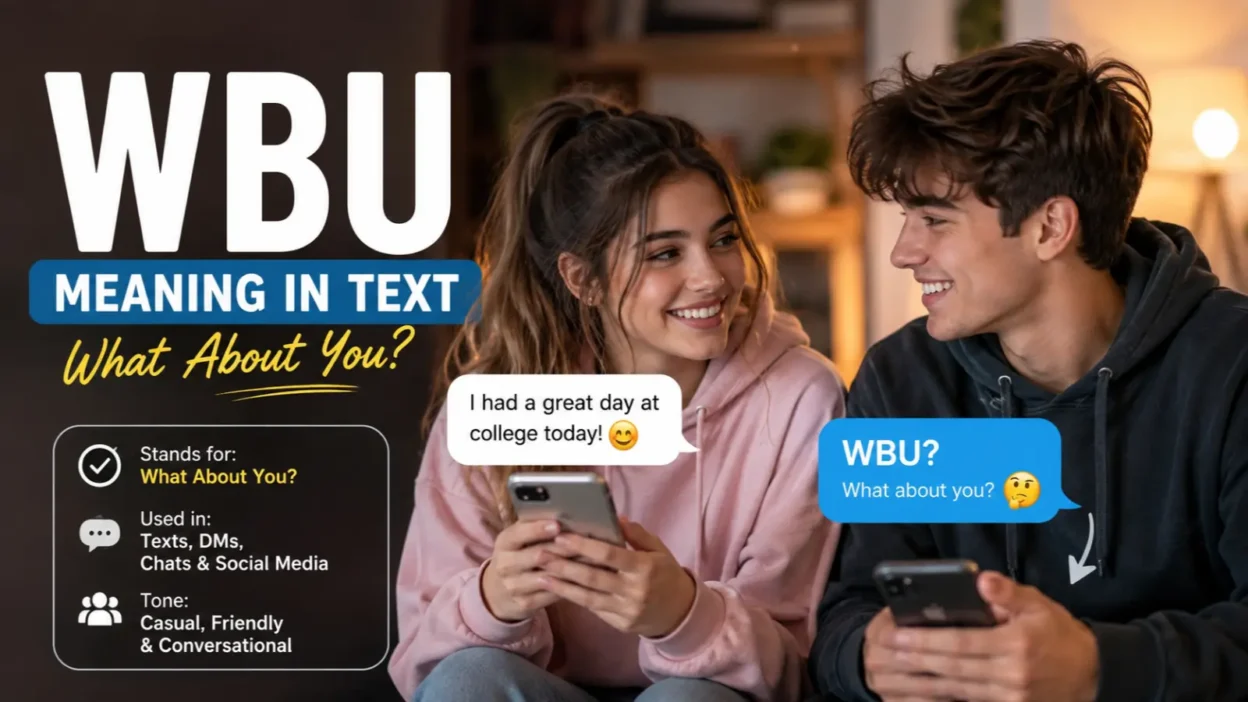
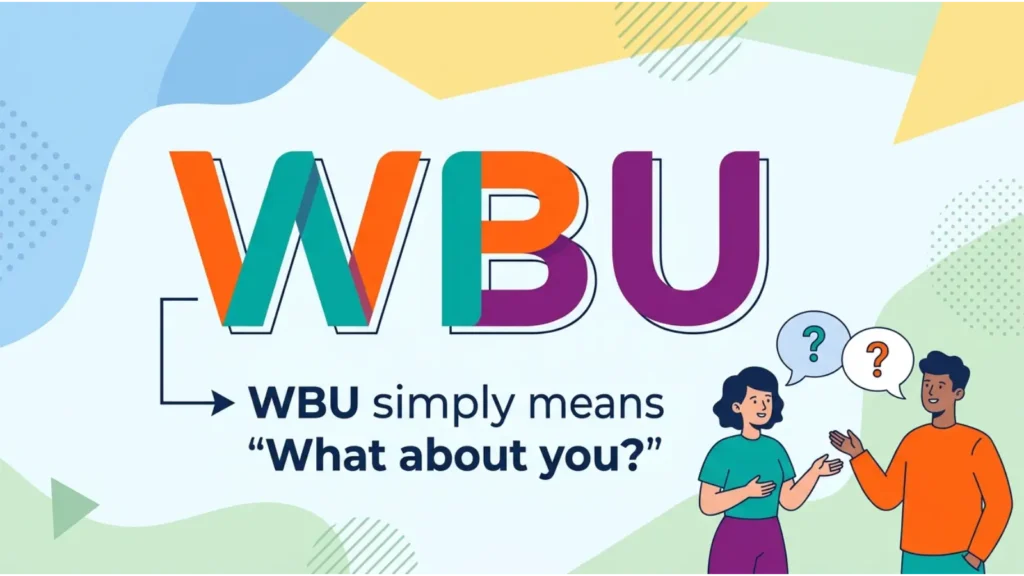
WBU meaning in text is “What about you?” People use it to return a question, invite someone to share their thoughts, or keep a conversation moving without typing the full phrase.
For example:
Alex: “I’m watching a movie tonight. WBU?”
Sam: “Probably going out with my cousins.”
Here, WBU simply means “What about you?” The sender has answered the original topic and is now asking for your side.
That simplicity explains why WBU remains common in texting, DMs, group chats, comments, and casual online conversations. Yet the emotional meaning can change depending on the situation. A quick “WBU?” from a close friend feels different from “WBU?” after someone shares something personal.
Quick Definition & Meanings
1. WBU Means “What About You?”
The most common meaning of WBU is “What about you?”
It usually appears after someone answers a question and wants the other person to respond.
Example:
“I’m from Lahore. WBU?”
Meaning:
“I’m from Lahore. What about you?”
This usage is neutral, friendly, and conversational.
2. WBU Can Mean “How About You?”
In everyday conversation, “What about you?” and “How about you?” often perform almost the same function.
Example:
“I’m feeling pretty good today. WBU?”
The person is essentially asking:
“How are you feeling?”
So depending on the subject, WBU can naturally carry the sense of “How about you?”
3. WBU as a Conversation Opener
Sometimes someone uses WBU not merely to return a question but to encourage you to keep talking.
Example:
“I’m thinking about changing jobs. WBU?”
The person isn’t necessarily asking whether you are changing jobs. They may be inviting you to share what is happening in your own life.
4. WBU as a Friendly Check-In
WBU can also function as a small social check-in.
Example:
“I’m doing okay after the exam. WBU?”
Here, the acronym creates a quick opening for the other person to talk about their experience.
5. WBU in a Flirty Conversation
The acronym itself is not inherently flirty, but context can make it feel that way.
Example:
“I’m free this weekend. WBU? 👀”
The added emoji, previous messages, or romantic context may make the question feel playful or suggestive.
The important distinction is that WBU doesn’t create the flirtation by itself. The surrounding conversation does.
6. WBU in a Casual or Playful Tone
Friends may use WBU because it feels faster and more relaxed than writing the entire phrase.
Example:
“I ordered pizza 😂 WBU?”
The message sounds informal and familiar rather than serious.
What Does WBU Mean in Texting & Messaging?
In texting, WBU works as a conversational shortcut.
Instead of typing:
“What about you?”
someone can type:
“WBU?”
This is part of a broader internet-language pattern in which people shorten frequently used phrases to make digital conversations faster and more natural.
You’ll commonly see WBU after statements about:
- Feelings
- Plans
- Food
- Hobbies
- Relationships
- School
- Work
- Location
- Opinions
- Weekend activities
- Personal experiences
For example:
“I’m exhausted after work. WBU?”
“I love horror movies. WBU?”
“I’m staying in tonight. WBU?”
“I’m from Karachi. WBU?”
In each case, the meaning remains essentially “What about you?”
WBU in Private DMs
In a private conversation, WBU can feel particularly natural because the participants already share an informal communication style.
You: “I’m just scrolling TikTok.”
Friend: “Same lol. WBU?”
The short response signals familiarity and keeps the exchange moving.
WBU in Group Chats
Group-chat usage can be slightly different.
“I’m going Friday. WBU guys?”
Here, WBU expands the question from one person to several people.
Someone may also write:
“I’m bringing snacks. WBU?”
The question becomes a quick invitation for others to contribute information.
WBU and Read Receipts
Digital communication adds another layer to short expressions like WBU.
If someone sends a thoughtful paragraph and receives only “WBU?”, the response might feel dismissive. But if the conversation is already rapid-fire, the same acronym can feel completely normal.
That is why message length alone doesn’t determine emotional warmth. Timing, previous messages, punctuation, emojis, and the relationship between the people all influence how WBU is interpreted.
WBU Origin, Evolution & Social Media Spread
WBU belongs to the larger tradition of internet and mobile-phone shorthand that developed as people looked for faster ways to communicate online.
The exact origin of the three-letter abbreviation is difficult to assign to one person or one platform. It emerged as part of the broader culture of chat rooms, instant messaging, SMS, forums, and later social networks where users routinely shortened common phrases.
Expressions such as:
- WBU = What about you?
- HBU = How about you?
- WBY = What about you?
- IDK = I don’t know
- BTW = By the way
- TBH = To be honest
- IMO = In my opinion
all belong to the same general ecosystem of digital shorthand.
As texting became more widespread, users didn’t need to type every word. Familiar communities could understand abbreviations almost instantly.
Social platforms later amplified these expressions. Short-form communication on messaging apps, comments, gaming chats, and social media made compact language feel normal, especially among people accustomed to typing quickly on phones.
Has Social Media Changed the Meaning of WBU?
Not dramatically.
Unlike slang terms whose meanings can shift substantially through memes or subcultures, WBU has retained a relatively stable core meaning: “What about you?”
What changes is the tone.
1 A WBU in a romantic DM can feel playful.
2 A WBU between friends can feel effortless.
3 A WBU in a serious conversation can feel abrupt.
4 A WBU in a professional email may look overly casual.
The phrase stays recognizable while the social meaning around it changes.
Real-Life Conversations
WhatsApp / iMessage Chat
Mia: “I’m staying home tonight.”
Jake: “Same, honestly 😭 WBU tomorrow?”
Mia: “I’m free after 6.”
What it means:
Jake is asking what Mia plans to do tomorrow.
Instagram DM
Sara: “That concert looks amazing.”
Noah: “Yeah, I really want to go. WBU?”
Sara: “Definitely. I’m checking ticket prices now.”
What it means:
Noah is asking whether Sara also wants to attend.
TikTok Comment
User 1: “I could eat this every day.”
User 2: “Same 😂 WBU?”
Depending on the video, WBU could mean “What about you?” regarding the person’s preference or experience.
Friendly Check-In
Chris: “My interview went better than I expected.”
Dan: “Nice! WBU? How did yours go?”
Here, WBU keeps the conversation reciprocal. One person shared an experience, and the other asks for the listener’s experience.
A Slightly Flirty Example
Taylor: “I’m free Saturday night 👀 WBU?”
Jordan: “Funny, I was about to ask you the same thing.”
WBU isn’t automatically romantic. The flirting comes from the context, timing, wording, and emojis.
The Emotional Pattern Behind WBU
People often choose WBU because it makes conversation feel quick, reciprocal, and low-pressure.
Typing “What about you?” can sound slightly more deliberate. Typing “WBU?” feels lighter.
That difference matters in digital communication because people constantly balance two goals:
- Sharing enough to show interest.
- Keeping the conversation effortless.
WBU accomplishes both in just three characters.
The Psychology Behind WBU
Short internet expressions can reveal more than convenience. They also reflect how people manage social interaction online.
WBU Signals Reciprocity
Conversation becomes uncomfortable when one person talks continuously without showing interest in the other person.
WBU creates an immediate return:
I answered your question. Now I’m interested in your answer.
That makes it a useful conversational bridge.
WBU Can Signal Familiarity
When people already communicate casually, abbreviations become part of their shared language.
A friend who routinely types “WBU?” probably isn’t trying to sound cryptic. They’re using the communication style that feels normal within that relationship.
WBU Can Reduce Social Pressure
“What about you?” can sometimes feel more formal or intentional.
“WBU?” makes the same question feel lighter.
That can be useful when someone wants to show interest without making the interaction feel overly serious.
Short Doesn’t Always Mean Cold
One common mistake in digital communication is assuming that shorter messages automatically mean less emotional investment.
That’s not necessarily true.
Someone can write:
“WBU? ❤️”
and communicate warmth.
Someone can also write:
“What about you.”
and sound irritated.
The words are almost identical, but punctuation and context change the emotional interpretation.
How to Use WBU Correctly
Social Media vs. Private Texts
WBU works naturally on platforms built around casual communication.
It’s especially common in:
- Text messages
- iMessage
- Instagram DMs
- Snapchat
- TikTok comments
- Discord
- Casual gaming chats
Close Friends vs. Acquaintances
With close friends, WBU usually requires little explanation.
With acquaintances, it can still work if the conversation is already casual.
For example:
“I’m studying computer science. WBU?”
This sounds perfectly natural in an informal introduction.
Professional or Formal Environments
Use caution in professional communication.
Instead of:
“I finished the report. WBU?”
a workplace message might be better as:
“I’ve finished the report. How are things on your end?”
Or:
“I’ve completed my section. How is your part coming along?”
WBU isn’t offensive in most situations, but it can appear overly informal depending on the workplace and audience.
When NOT to Use WBU
During a Serious Argument
If someone is discussing something emotionally important, replying only with “WBU?” may appear dismissive.
Person A: “I felt hurt when you ignored my message yesterday.”
Person B: “WBU?”
That response doesn’t address the emotional issue and may make the situation worse.
A fuller response would show that you’ve actually listened.
In Formal Emails
Avoid WBU in formal emails, academic writing, official documents, and other contexts where conventional language is expected.
With Someone Who Doesn’t Know Internet Acronyms
Not everyone uses digital shorthand.
If you’re communicating with someone unfamiliar with texting abbreviations, writing “What about you?” removes unnecessary confusion.
When You Need to Be Precise
If the question has a specific meaning, don’t rely on a vague abbreviation.
For example:
“I’m available Friday. WBU?”
is casual but somewhat open-ended.
A more precise version could be:
“I’m available Friday. Are you free too?”
Common Misconceptions About WBU
Misconception 1: WBU Is Always Flirty
False.
WBU simply means “What about you?” Romantic or flirty meaning comes from context.
Misconception 2: WBU Means “Why Be You”
That isn’t the standard texting meaning.
In ordinary online conversation, WBU overwhelmingly refers to “What about you?”
Misconception 3: WBU Is Rude
Not inherently.
The tone depends on the conversation.
A quick WBU between friends is normal. A one-word WBU in the middle of an emotional discussion could feel insensitive.
Misconception 4: WBU and HBU Are Completely Different
They’re extremely similar.
WBU = What about you?
HBU = How about you?
In many conversations, either one can work.
WBU vs. Similar Expressions
| Expression | Primary Meaning | Tone | Best Usage Context |
|---|---|---|---|
| WBU | What about you? | Casual, conversational | Texts, DMs, chats |
| HBU | How about you? | Casual, friendly | Texting and social media |
| WBY | What about you? | Informal | Chats and messages |
| And you? | Asking for the other person’s response | Neutral | Casual or semi-formal conversation |
| How about yourself? | Asking about the other person | Polite, slightly formal | Professional or respectful conversation |
The Subtle Difference
WBU and WBY have almost the same meaning.
HBU is also very close but often sounds especially natural when discussing someone’s condition, feelings, or situation.
For example:
“I’m doing great. HBU?”
sounds completely natural.
Meanwhile:
“I chose pizza. WBU?”
also works naturally because the question concerns the other person’s choice.
The best expression depends on the subject and the communication style of the people involved.
WBU Variations, Derivatives & Common Forms
Because WBU is already a compact abbreviation, it doesn’t have many true grammatical derivatives.
However, people may modify it creatively in casual online communication.
Common related forms include:
- WBU? — What about you?
- wbu? — lowercase casual version
- WBU lol? — playful or relaxed version
- WBU 😂 — humorous response
- WBU tho? — more conversational emphasis
- HBU? — How about you?
- WBY? — What about you?
The lowercase form “wbu” often feels especially casual because lowercase texting has become associated with relaxed online communication.
How to Reply to WBU
When someone sends WBU?, your response depends on what they originally asked.
Casual Replies
“Same here!”
“I’m probably staying home.”
“Pretty much the same.”
“I’m going out later.”
“Not sure yet lol.”
Funny or Sarcastic Replies
“WBU? I’m apparently surviving 😂”
“WBU? Mentally still on vacation.”
“WBU? Asking the important questions now 😭”
“WBU? Classified information.”
Mature or Direct Replies
“I’m doing well, thanks for asking.”
“I’m planning to stay home tonight. What about you?”
“I’m still deciding, but I’ll probably go tomorrow.”
If you’re unsure whether the other person understands abbreviations, simply mirror their style or use the complete phrase.
Gen Z, Millennials & Older Generations
Different generations can interpret WBU differently, even though the literal meaning remains stable.
Gen Z
For many Gen Z users, WBU feels completely ordinary in digital conversation. Lowercase texting, abbreviations, emojis, reaction images, and intentionally informal grammar can all coexist naturally.
A message such as:
“idk yet wbu”
can feel perfectly normal.
Millennials
Millennials also commonly recognize WBU because many encountered internet abbreviations through early instant messaging, forums, SMS, and social networks.
However, individual preferences vary. Some people use WBU frequently, while others prefer typing the full phrase.
Older Audiences
Older users may understand WBU but may be less likely to use it themselves.
With someone unfamiliar with internet shorthand, writing “What about you?” is usually clearer.
Global Internet Culture
WBU also travels easily across borders because its meaning is straightforward and highly visible on social platforms.
Non-native English speakers may encounter WBU through TikTok, Instagram, gaming communities, YouTube comments, messaging apps, or English-language memes.
Because digital slang is increasingly global, people often learn these abbreviations from repeated exposure rather than formal language education.
FAQs:
What does WBU mean in text?
WBU means “What about you?” It is a casual texting abbreviation used to ask for another person’s answer, opinion, feelings, plans, or experience.
What does WBU mean on TikTok?
On TikTok, WBU usually means “What about you?” People may use it in comments or messages when asking someone to share their own opinion or experience.
Is WBU rude?
No, WBU is not inherently rude. It is normally casual and friendly, although using only “WBU?” during a serious or emotional conversation can sometimes seem dismissive.
What is the difference between WBU and HBU?
WBU means “What about you?” while HBU means “How about you?” They are extremely similar and can often be used interchangeably in casual conversations.
How do you respond to WBU?
Answer the question that came before it or share your own situation. For example, if someone says, “I’m staying home tonight, WBU?”, you could reply, “I’m going out with friends.”
Can WBU be flirty?
WBU can appear in flirty conversations, but the acronym itself isn’t inherently romantic. The surrounding words, emojis, relationship, and context determine whether the message feels flirtatious.
What are similar phrases to WBU?
Common alternatives include HBU (“How about you?”), WBY (“What about you?”), “And you?”, and “How about yourself?”
Final Thought:
WBU meaning in text is simple: “What about you?” But its usefulness goes beyond saving a few keystrokes.
The expression demonstrates how modern digital communication combines efficiency with social connection. Someone answers a question, then uses WBU to hand the conversational spotlight back to you.
That tiny exchange can communicate curiosity, reciprocity, familiarity, or simple conversational rhythm.
The key is context. WBU between friends can feel effortless. WBU in a flirtatious DM can feel playful. And WBU in a serious conversation can feel too brief. The abbreviation stays the same, but the emotional meaning changes with the relationship and situation.
That is one of the most interesting features of internet language: sometimes three letters are enough to keep an entire conversation moving.
When someone asks “WBU?”, they’re usually doing something very human behind the screen: they’re saying, “I told you my side—now I want to hear yours.”

I am Maxwell Ford, the creator of meaningosho.com, where I explore the origins and clear definitions of everyday words. I built this platform to help readers easily decode complex vocabulary and deepen their understanding of language. Through my articles, I love sharing simple, engaging insights that make learning new words both fun and useful.