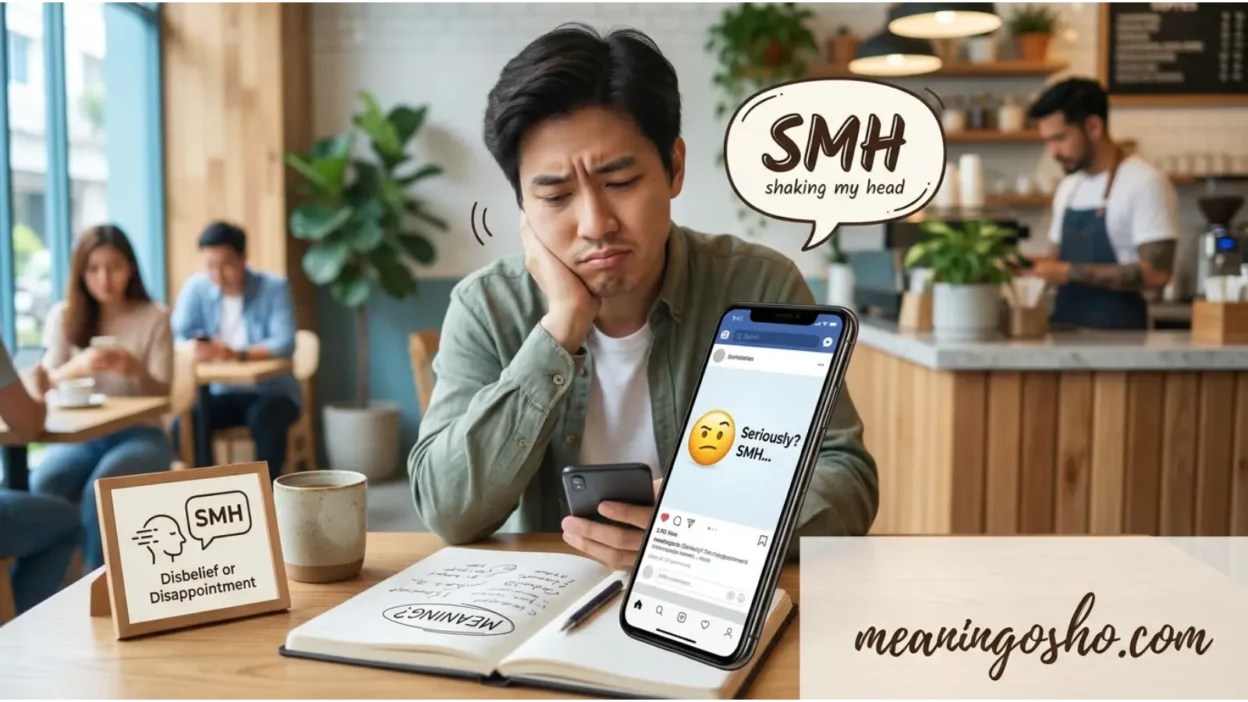
You’re scrolling through a group chat or a comment section, and someone types “smh” after a story that doesn’t sit right with them.
No caps, no punctuation, just three lowercase letters. If you’re not sure what it means, you’re not alone.
This little abbreviation shows up constantly in texts, tweets, and comments, and it carries a specific emotional weight that’s easy to miss if you’re new to it.
Quick Answer:
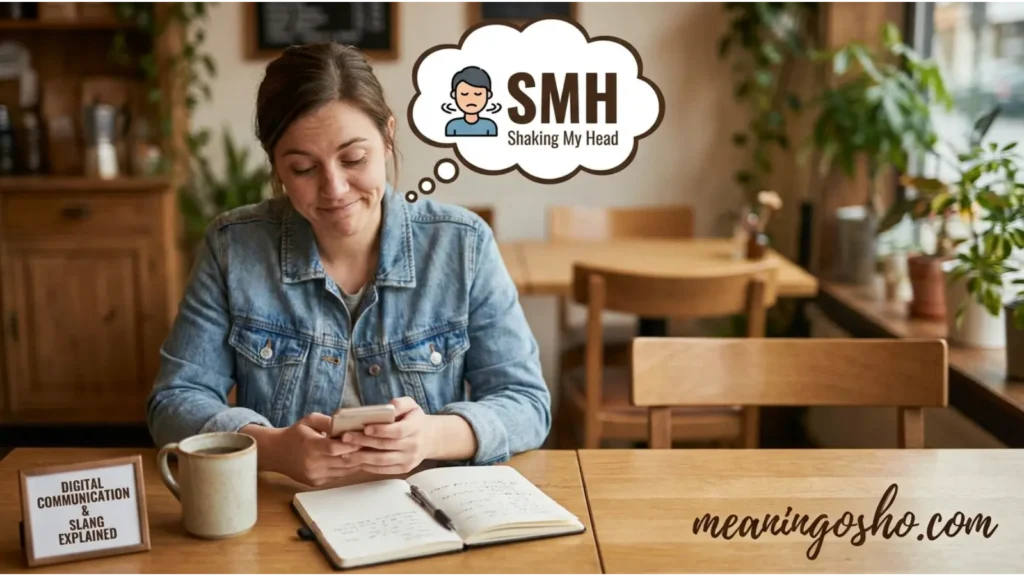
SMH stands for “shaking my head.” It’s an internet abbreviation used to express disappointment, disbelief, frustration, or secondhand embarrassment about something.
It usually doesn’t have multiple unrelated meanings, though its tone can shift slightly depending on context — from genuine annoyance to playful teasing among friends.
This guide breaks down everything about the SMH meaning in text: where it came from, how people actually use it today, and the small details that change its tone from message to message.
What Does SMH Meaning in Text?
SMH is short for “shaking my head.” It’s meant to mimic the physical gesture people make when they’re disappointed, annoyed, or in disbelief.
Instead of typing out a full reaction, someone just types “smh” to signal that gesture in text form.
It’s part of a bigger family of texting abbreviations, alongside things like LOL, TBH, and IMO, that let people communicate emotion quickly without slowing down a fast-moving conversation.
The Deeper Meaning Behind SMH
On the surface, SMH just describes a head shake. But in practice, it carries more nuance. People use it to express that something is so obviously wrong, frustrating, or ridiculous that words almost feel unnecessary.
It’s a shorthand for “I can’t believe this” or “this is disappointing,” often delivered with a slight edge of judgment.
The tone can range from mild irritation to genuine frustration, and reading the surrounding message usually tells you which one applies.
SMH Meaning in Text vs. SMH on Social Media
The core SMH meaning in text stays the same whether you’re texting a friend or commenting on a public post, but the intensity often shifts.
In private texts, SMH tends to feel casual and personal, almost like an inside reaction between two people who already understand the context.
On public social media posts, SMH can be read as more pointed, sometimes used to publicly call out behavior, news, or a viral moment that many people find frustrating or absurd.
Emotional Tone: Disappointment, Disbelief, or Judgment
SMH sits in an interesting emotional space. It’s not full-blown anger, and it’s not sadness either.
It’s closer to a mix of disappointment and mild disbelief, often with a hint of judgment attached. Someone using SMH is usually saying, “I expected better” or “this is embarrassing to watch.”
The tone rarely escalates to hostility; it’s more of a resigned, eye-rolling reaction than an aggressive one.
How SMH Is Used on WhatsApp
On WhatsApp, SMH usually appears in casual chats between friends or family. Someone might share a screenshot of an awkward text, a bad decision, or a frustrating news headline, and the reply comes back simply as “smh.”
Since WhatsApp conversations tend to be more personal and ongoing, SMH here often carries a shared understanding — both people already know exactly why the reaction fits, so no extra explanation is needed.
How SMH Is Used on TikTok and Instagram
On TikTok and Instagram comment sections, SMH often reacts to a video or post that shows something disappointing, cringeworthy, or frustrating.
It might respond to a bad take, an awkward moment, or a controversial opinion. Because these platforms are public, SMH here can carry more social weight, sometimes functioning almost like a mini public critique.
Commenters use it to align with others who share the same reaction without writing a full paragraph.
How SMH Is Used on Discord and in Gaming Chats
In gaming communities and Discord servers, SMH often pops up after a teammate makes a costly mistake, or when a match goes badly due to bad decisions.
It’s a quick way to express frustration without breaking the flow of a fast-paced chat.
Gamers frequently pair it with other slang like “gg” or “bruh,” creating a shorthand emotional language that regular players instantly understand, even without full sentences.
Realistic Conversation Examples
Seeing SMH in real dialogue makes the meaning click faster than any definition. Here are a few natural examples:
- Friend group chat: “He said he’d be here at 7 and it’s 8:30 smh”
- Comment on a viral video: “The way he just walked away without apologizing… smh”
- Gaming chat: “You had the whole team and still missed that shot smh”
- Work banter (casual team): “IT told me to restart my laptop again smh, classic”
Each example shows the same core feeling: mild disbelief mixed with frustration.
SMH Used Sarcastically or Playfully
Not every SMH is serious. Among close friends, it’s often used jokingly, almost as a form of teasing.
If a friend shares an embarrassing but harmless story, replying “smh” can be affectionate rather than critical, like saying “you’re ridiculous, but I love it.”
Context and relationship closeness usually determine whether SMH lands as genuine disappointment or lighthearted teasing between people who know each other well.
Origin, Culture, and History of SMH
SMH belongs to a broader wave of internet abbreviations that emerged from early online forums, instant messaging, and text messaging culture in the 2000s.
Like many similar terms, its exact first use isn’t officially documented, so its precise origin remains unconfirmed.
What is clear is that it grew alongside other shorthand phrases during a period when character limits and fast typing mattered, especially on platforms like AIM, early forums, and SMS texting.
Cultural and Regional Roots of SMH
SMH doesn’t appear to belong to one specific region or demographic group exclusively. It spread broadly across English-speaking internet culture, gaining traction through everyday texting and forum communities rather than any single subculture.
That said, it became especially common in casual online spaces where quick, emotionally expressive replies were the norm, including gaming communities, social media comment sections, and group texting culture among younger users.
Who Helped Popularize SMH
There’s no single influencer, song, or viral moment credited with popularizing SMH. Instead, it grew organically as internet slang often does, spreading through repeated everyday use across message boards, texting, and eventually social media platforms.
Its simplicity likely helped it spread faster than more complex slang, since anyone could understand and use it without needing extra explanation or cultural context.
SMH in Professional or Workplace Settings
Using SMH at work is risky unless the environment is very casual. In professional emails or formal Slack channels, it can come across as unprofessional or dismissive, especially if directed at a colleague’s mistake.
If frustration needs to be expressed professionally, alternatives like “this is frustrating” or “I was surprised by this” communicate the same idea without the informal tone that SMH carries.
Synonyms and Similar Expressions
Several other abbreviations and phrases express similar feelings to SMH, though each has slightly different intensity:
- FML – stronger frustration, often self-directed
- Bruh – disbelief, often lighter in tone
- Yikes – secondhand embarrassment
- I can’t even – overwhelmed disbelief
- Ugh – general annoyance
These aren’t perfect substitutes, but they occupy similar emotional territory.
Antonyms and Opposite Reactions
Since SMH expresses disappointment or disbelief, its opposite would be expressions of approval, excitement, or admiration.
Phrases like “this is amazing,” “so proud,” or abbreviations like “W” (short for “win”) represent the emotional opposite.
Where SMH signals letdown, these alternatives signal genuine praise or excitement about something happening.
Common Misunderstandings About SMH
Some people mistake SMH for anger or aggression, but it’s usually milder than that. It’s closer to disappointed resignation than hostility.
Others assume it always means something serious went wrong, when often it’s used for small, everyday annoyances like a friend running late or a minor inconvenience.
Understanding this range helps avoid overreacting to a message that was meant casually.
When NOT to Use SMH
Avoid SMH in formal writing, professional emails, academic work, or serious conversations involving sensitive topics.
It can come across as dismissive or flippant in situations that call for empathy or careful wording, such as discussing someone’s personal struggles or a serious mistake with real consequences.
In these cases, a genuine sentence expressing concern communicates far more respect than an abbreviation.
SMH Compared to Similar Abbreviations (LOL, TBH, IMO)
Unlike LOL, which expresses humor, or TBH and IMO, which introduce honest opinions, SMH is uniquely tied to disappointment or disbelief.
It doesn’t function as an opinion marker or a laughter cue. Recognizing this distinction helps avoid confusing SMH’s emotional tone with other common texting abbreviations that serve completely different conversational purposes.
Key Takeaways
- SMH stands for “shaking my head” and expresses disappointment, disbelief, or mild frustration.
- It’s used across texting, social media, and gaming chats, with tone shifting slightly by platform.
- SMH can be genuine or playful, depending on the relationship between the people talking.
- Its exact origin is unconfirmed, though it grew from early 2000s internet and texting culture.
- Avoid using it in formal or professional settings, where clearer language works better.
FAQs:
Does SMH always mean something negative?
Mostly yes, but the intensity varies. It can express real frustration or light, joking disappointment among friends.
Is SMH the same as being angry?
Not usually. SMH tends to reflect disbelief or letdown rather than genuine anger.
Can SMH be used sarcastically?
Yes, especially between close friends, where it often signals playful teasing rather than real disapproval.
Is it okay to use SMH at work?
Only in very casual work chats. In formal emails or professional settings, it’s better to avoid it.
Where did SMH come from?
Its exact origin is unconfirmed, but it emerged from early internet and texting culture in the 2000s.
Does SMH have multiple meanings?
No, it consistently means “shaking my head,” though its emotional intensity can shift with context.
Conclusion
At its core, the SMH meaning in text always comes back to one simple idea: shaking my head.
If it shows up in a group chat, a comment section, or a gaming lobby, SMH captures that quick flash of disappointment or disbelief we all feel sometimes.
Understanding the SMH meaning in text helps you read tone accurately and use it appropriately, whether you’re teasing a friend or reacting to something genuinely frustrating online.

I am Maxwell Ford, the creator of meaningosho.com, where I explore the origins and clear definitions of everyday words. I built this platform to help readers easily decode complex vocabulary and deepen their understanding of language. Through my articles, I love sharing simple, engaging insights that make learning new words both fun and useful.