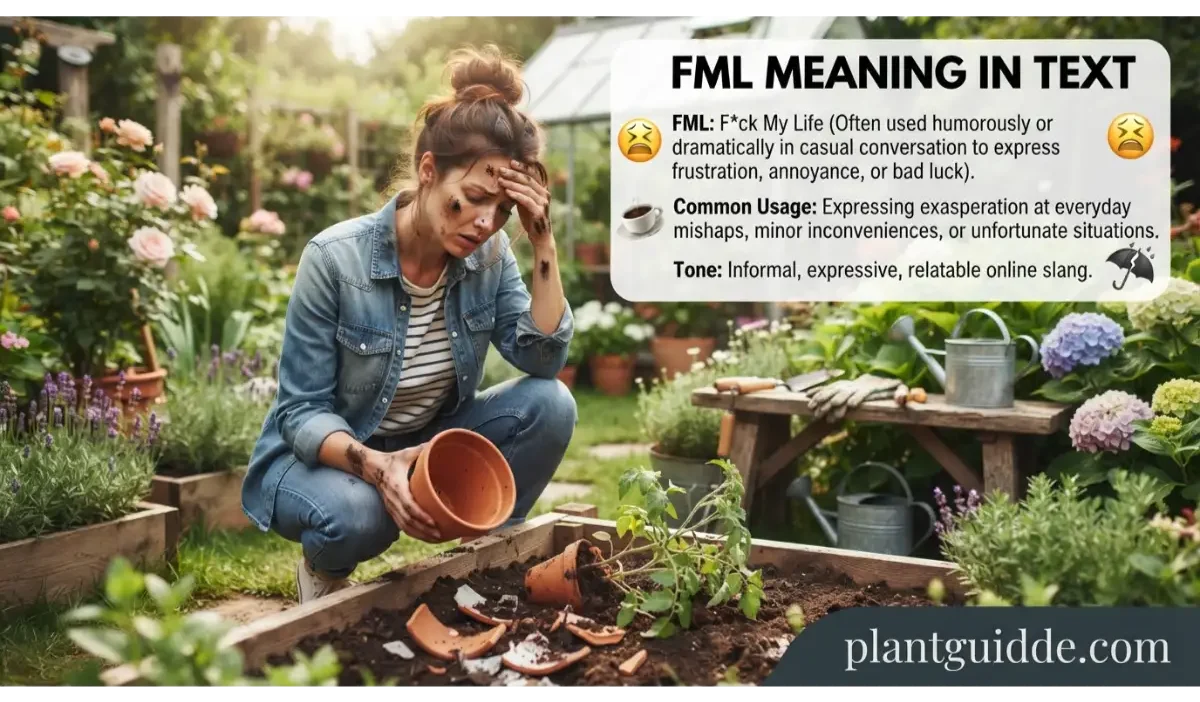
In most online conversations, FML means “fuck my life.” People use it to react to something frustrating, embarrassing, unlucky, or annoying.
It can be serious, but it is often used casually or humorously when someone is having a bad moment.
Because it contains profanity, the expression is usually better suited to casual conversations than professional or formal situations.
Quick Answer
FML usually means “fuck my life.”
It is slang used when someone is frustrated, embarrassed, disappointed, or dealing with an annoying situation.
It can be used seriously or jokingly, depending on the situation and the relationship between the people texting.

All Meanings of FML
1. FML = “Fuck My Life” — Most Common
This is by far the meaning you are most likely to see in texting, social media, comments, and casual online conversations.
Someone may type FML when something goes wrong or when they feel like they have had a particularly unlucky moment.
Example:
“I missed the bus and now I’m going to be late for work. FML.”
Here, the person is basically saying, “This is really frustrating” or “I can’t believe this happened to me.”
The expression is informal and contains strong profanity, although many people use it casually without intending it as an extremely serious statement.
2. FML Used Humorously
FML is also commonly used as an exaggerated joke.
Someone might have a small inconvenience and write “FML” to make the situation sound dramatically worse than it really is.
Example:
“I opened the fridge and realized I forgot to buy milk. FML 😂”
The person probably isn’t genuinely upset about their life. They are using the slang to make the situation funny.
This humorous use is especially common among friends and in casual online posts.
3. FML as a Reaction to Bad Luck
Sometimes FML is simply a quick reaction to an unlucky event.
For example:
“My phone died right before I was about to take a picture. FML.”
In this case, it expresses annoyance and bad luck rather than a serious statement about someone’s entire life.
What About Other Meanings?
FML can technically stand for other phrases in specialized contexts, but “fuck my life” is the meaning most relevant to everyday texting and social media.
If you see FML in a normal conversation with friends, there is usually little reason to assume a technical or unusual meaning unless the surrounding conversation clearly points somewhere else.
Similar Terms to FML
Several slang expressions can communicate frustration, but they do not all have the same tone.
SMH
SMH means “shaking my head.”
It is often used when someone is disappointed, confused, or annoyed by someone’s actions.
Example:
“He forgot his own birthday. SMH.”
Unlike FML, SMH does not necessarily mean something bad happened to the person using it.
WTF
WTF usually means “what the fuck.”
It is generally used to express shock, confusion, surprise, or disbelief.
Example:
“WTF? The store is closed already?”
FML focuses more on frustration or bad luck.
Ugh
Ugh is a simple expression of annoyance or frustration.
Example:
“Ugh, I have to work late again.”
It is less explicit and more generally acceptable than FML.
OMG
OMG means “oh my God.”
It can express surprise, excitement, shock, or disbelief.
Example:
“OMG, you actually won!”
Unlike FML, OMG is not specifically connected to something going wrong.
IDK
IDK means “I don’t know.”
It is used when someone doesn’t know the answer or isn’t sure about something.
Example:
“IDK what happened.”
It has a completely different basic meaning from FML, but both are common texting abbreviations.
FML in Texting and Social Media
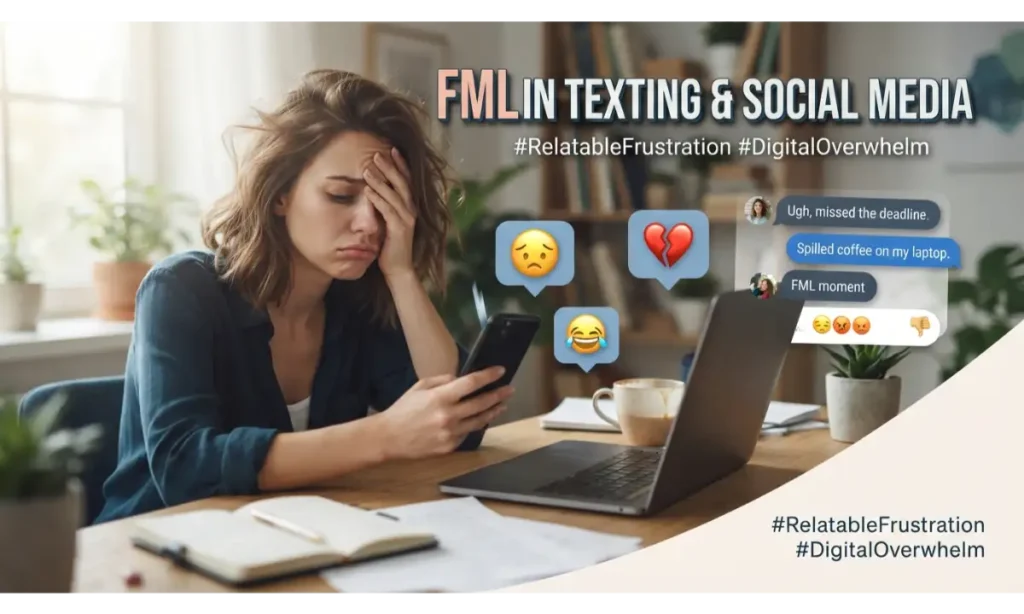
FML is mainly used in casual digital communication.
You may see it in:
- Text messages
- Group chats
- Social media posts
- Comments
- Online communities
- Casual direct messages
People often combine FML with emojis to make the tone clearer.
For example:
“I locked my keys in the car again. FML 😭”
Or:
“The internet stopped working during my exam. FML 💀”
The emoji can make the message feel more humorous and less serious.
FML is generally not something you would use in a formal email, business message, job application, or professional communication.
Context Differences
With Friends
Among friends, FML can be a normal way to complain about something annoying.
“I forgot my headphones at home. FML.”
Your friends will usually understand that you are expressing frustration.
In Dating Conversations
FML can also appear in casual conversations between people who are dating or getting to know each other.
For example:
“I planned a whole movie night and now the power is out. FML 😂”
The meaning does not automatically indicate anything romantic. The surrounding conversation matters more than the abbreviation itself.
At Work
FML is usually inappropriate in professional communication because it contains profanity.
Instead of:
“FML, I have to redo the report.”
You could simply say:
“This is frustrating. I have to redo the report.”
The second version communicates the same basic feeling without using profanity.
Real Text Examples
Example 1: Bad Luck
Sam: “How was your morning?”
Alex: “Got a flat tire on the way to work.”
Sam: “Oh no.”
Alex: “Yep. FML.”
Here, FML means the person is frustrated about the unlucky situation.
Example 2: Funny Situation
Mia: “I just realized I wore two different shoes today.”
Sara: “😂 How did you not notice?”
Mia: “FML.”
This is clearly being used humorously.
Example 3: Missed Deadline
Tom: “Did you submit the project?”
Ben: “I thought it was due tomorrow.”
Tom: “It was due this morning.”
Ben: “FML 😭”
The abbreviation shows frustration and regret.
Example 4: Small Problem
A: “Want to order pizza?”
B: “Yes!”
A: “Just checked. They’re closed.”
B: “FML 😂”
This is an exaggerated reaction to a minor disappointment.
Example 5: Unexpected Problem
Lisa: “My laptop just crashed.”
Nina: “Did you save your work?”
Lisa: “No…”
Nina: “Oh no 😭”
Lisa: “FML.”
Here, the expression communicates genuine frustration.
Example 6: Casual Complaint
Mark: “What are you doing tonight?”
Chris: “Studying.”
Mark: “On Friday?”
Chris: “Yeah. Exam tomorrow. FML.”
The person is complaining about having to study instead of enjoying their evening.

When Not to Use FML
The biggest thing to remember is that FML contains profanity.
Avoid using it in situations where informal language or profanity could cause a problem, such as:
- Job applications
- Professional emails
- Messages to clients
- Formal school assignments
- Official documents
- Conversations with people you do not know well
A safer alternative is:
- “This is frustrating.”
- “What a bad day.”
- “I can’t believe this happened.”
- “This is so annoying.”
- “I’m having terrible luck.”
These alternatives communicate the same general idea without profanity.
Common Mistakes About FML
Mistake 1: Thinking It Always Means Something Serious
FML does not necessarily mean the person is genuinely miserable.
People often use it jokingly for small problems.
Mistake 2: Assuming It Is Always Angry
The tone depends on the context.
“FML 😭😂” may be a humorous reaction, while “FML” after a serious problem may express real frustration.
Mistake 3: Using It in Formal Messages
Because FML contains profanity, it is generally unsuitable for professional or formal communication.
Mistake 4: Assuming FML Has a Romantic Meaning
FML does not normally indicate romantic interest. It is simply an expression of frustration, bad luck, or annoyance.
How to Reply to FML
Your response depends on what happened.
If you want to show sympathy:
“Oh no, what happened?”
If the situation is funny:
“😂 That’s rough.”
If you already know what happened:
“Damn, that’s unlucky.”
If you want to be supportive:
“Hopefully things get better.”
If they are clearly joking:
“Lol, you’ll survive 😂”
A simple response like “What happened?” is often the safest choice when you’re unsure whether the person is joking or genuinely upset.
FAQs About FML Meaning in Text
What does FML mean in texting?
FML usually means “fuck my life.” It is slang used to express frustration, annoyance, disappointment, embarrassment, or bad luck.
Is FML a bad word?
FML contains profanity, so it is considered vulgar or inappropriate in many formal situations. It is more common in casual conversations.
Is FML used seriously or jokingly?
It can be either. People often use FML humorously for minor problems, but it can also express genuine frustration after something goes wrong.
What does FML mean from a girl?
The meaning does not change based on gender. If someone uses FML, it generally means they are expressing frustration, annoyance, disappointment, or bad luck. Context determines the exact tone.
What does FML mean from a guy?
It normally has the same meaning: “fuck my life.” It does not automatically suggest anything romantic or emotional beyond the immediate situation.
Is FML rude?
It can be considered rude or vulgar because it contains profanity. Whether it feels offensive depends on the people involved and the setting.
What can I say instead of FML?
You can say “What a bad day,” “This is frustrating,” “That sucks,” or “I can’t believe this happened.” These are useful alternatives when you want to avoid profanity.
Key Takeaways
- FML usually means “fuck my life.”
- It expresses frustration, annoyance, disappointment, embarrassment, or bad luck.
- People often use it humorously for small problems.
- The meaning and tone depend on the surrounding conversation.
- FML contains profanity, so it is mainly suitable for casual communication.
- It does not automatically have a romantic meaning.
Conclusion
When someone writes FML in a text, they are usually reacting to something frustrating, unlucky, embarrassing, or annoying.
The most common meaning is “fuck my life,” but the expression does not always mean the person is genuinely having a terrible time. Friends often use it as an exaggerated or funny reaction to everyday problems.
The easiest way to understand FML is to look at the situation around it. A message like “FML 😂” after missing the bus is probably playful, while the same expression after a serious problem may show real frustration.
Because it contains profanity, keep it for casual conversations and use simpler alternatives in professional or formal settings.

I am Maxwell Ford, the creator of meaningosho.com, where I explore the origins and clear definitions of everyday words. I built this platform to help readers easily decode complex vocabulary and deepen their understanding of language. Through my articles, I love sharing simple, engaging insights that make learning new words both fun and useful.