

If you have seen “ash” in a text, TikTok comment, DM, or group chat, you may have had the same reaction. The word looks like the normal English word ash, but online it can have a completely different meaning.
In casual texting, ASH usually means “as hell.” People use it after an adjective or description to make it much stronger. So, “I’m tired ash” means “I’m extremely tired,” while “that movie was funny ash” means “that movie was extremely funny.”
Still, context matters. “Ash” can also be a person’s name or the ordinary word for the powder left after something burns. Knowing where the word appears in a sentence usually tells you which meaning is intended.
Quick Answer:
In texting slang, ASH most commonly means “as hell.” It works as an informal intensifier, similar to very, really, or extremely.
For example, “I’m hungry ash” means “I’m extremely hungry.” Other meanings are possible, especially when “Ash” is a person’s name or “ash” refers to burnt material.
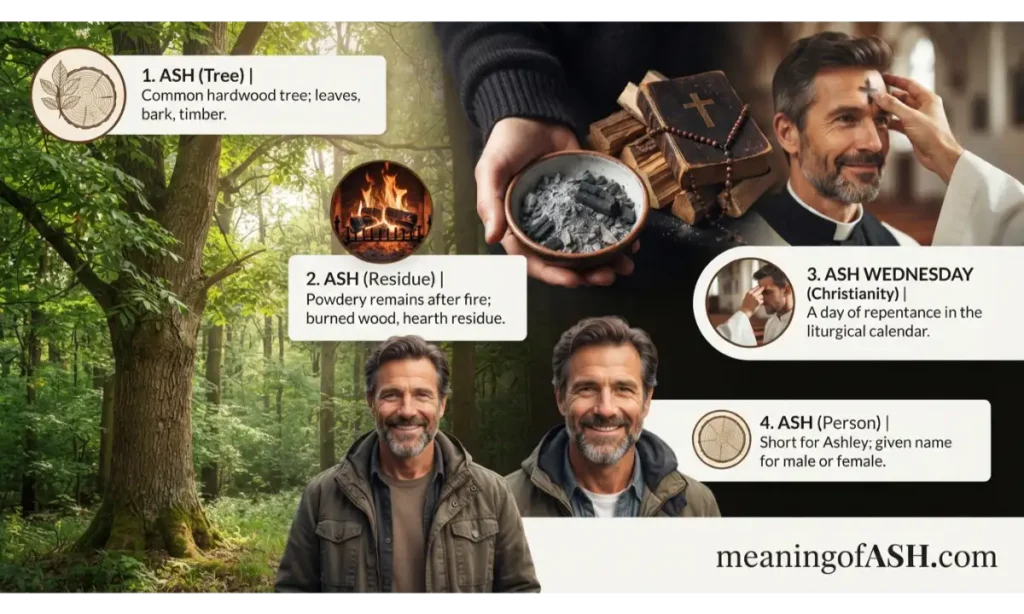
All Common Meanings of ASH
1. ASH = “As Hell” — the common slang meaning
This is the meaning you’re most likely looking for when you see ASH after an adjective in a casual message.
People use it to add extra emphasis:
- “I’m tired ash.” → I’m extremely tired.
- “It’s cold ash.” → It’s extremely cold.
- “That movie was funny ash.” → That movie was extremely funny.
- “I’m hungry ash.” → I’m very hungry.
- “This test was hard ash.” → This test was extremely difficult.
Here, ash is an intensifier. It doesn’t create a new idea; it makes the description stronger. Current slang references consistently describe this as the main texting use.
Tone: Very casual, expressive, and conversational.
Who uses it: It is mainly seen in informal online communication, particularly among people who are comfortable with current internet slang.
2. “Ash” as a person’s name or nickname
Sometimes Ash isn’t slang at all.
Someone might text:
“Hey Ash, are you coming tonight?”
Here, “Ash” is simply the person’s name or nickname. It may be short for names such as Ashley, Ashton, Asher, or Ashlyn, although not every person named Ash uses it as a shortened name.
Capitalization can be a clue, but don’t rely on capitalization alone. The sentence itself is more useful.
Tone: Neutral and personal.
Example:
Mia: “Can you ask Ash if she’s joining us?”
Sam: “Sure.”
In this case, trying to replace “Ash” with “as hell” would make no sense.
3. “Ash” as the normal English word
The word can also have its ordinary dictionary meaning: the powdery material left after something burns.
For example:
“There was ash all over the fireplace.”
That’s not internet slang. It is simply the normal English word.
This meaning is especially obvious when the conversation is about fire, wood, smoke, volcanoes, fireplaces, or similar subjects.
Which meaning is most likely?
Look at the position of the word.
Adjective + ash:
“That food is good ash.”
Likely means “that food is extremely good.”
Ash at the start of a sentence as a name:
“Ash said she’ll call later.”
Likely refers to a person.
Ash connected with burning:
“The fire left ash everywhere.”
Likely means the material left after burning.
Context is the easiest way to tell the difference.
Similar Terms to ASH
Very
“Very” is the safest and most neutral alternative.
“I’m very tired.”
It works in both casual and formal writing.
Really
“Really” sounds natural in everyday conversation and is less formal than “very.”
“That was really funny.”
Extremely
“Extremely” is stronger and more formal.
“The weather is extremely hot.”
You would normally choose this over ASH in professional or academic writing.
AF
AF is another internet intensifier. It can serve a similar purpose to ASH, but it comes from a profanity-based phrase and may sound more explicit.
“I’m tired AF.”
ASH is generally easier to use when you want a casual internet tone without writing the full profanity behind some similar expressions.
So
“So” can add emphasis without sounding like heavy slang.
“That was so funny.”
It is more widely understood and works in many everyday situations.

Texting and Social Media Use
ASH is mainly an informal online expression. It can appear in text messages, group chats, DMs, comments, captions, and gaming conversations. Online slang references commonly describe it in these casual settings.
You might see messages such as:
“I’m bored ash.”
“That game was fun ash.”
“You’re funny ash 😂”
“It’s hot ash today.”
The exact platform is less important than the tone. If people are talking casually, slang like ASH can fit naturally.
Context Differences
With friends
This is where ASH fits most naturally.
“Bro, I’m hungry ash.”
There is little risk of sounding too formal because the conversation is already relaxed.
In dating or flirting
ASH can appear in compliments or playful messages, but the word itself doesn’t automatically make a message romantic.
For example:
“You look good ash.”
That clearly sounds like a strong compliment, but whether it is flirting depends on the relationship and the rest of the conversation.
Don’t assume romantic intent just because ASH appears.
At work
ASH is usually better avoided in professional communication.
Instead of:
“This project is stressful ash.”
Use:
“This project is extremely stressful.”
The second version is clearer and more appropriate for a workplace.

Real Examples of ASH in Conversations
Example 1: Talking about tiredness
Alex: “You coming out tonight?”
Jay: “Nah bro, I’m tired ash.”
Alex: “Fair 😂 Get some sleep.”
Here, ASH means extremely tired.
Example 2: Talking about weather
Sara: “How’s it outside?”
Lina: “Cold ash. Bring a jacket.”
Sara: “Good to know.”
ASH simply strengthens “cold.”
Example 3: Compliment
Mike: “Did you see her new haircut?”
Dan: “Yeah, it looks good ash.”
Mike: “For real.”
The phrase means it looks really good.
Example 4: Food
Tom: “How’s the pizza?”
Chris: “Good ash 😂”
Tom: “I knew you’d like it.”
Here, ASH adds emphasis to “good.”
Example 5: School
Nina: “How was the exam?”
Ella: “Hard ash. I barely finished.”
Nina: “Same 😭”
The meaning is extremely hard.
Example 6: When ASH is a name
Jake: “Who are you waiting for?”
Mia: “Ash. He said he’d be here at 7.”
Jake: “Oh okay.”
Here, “Ash” is a person’s name, not slang.
When Not to Use ASH
ASH is internet slang, so it isn’t a good choice for most formal situations.
Avoid it in:
- Job applications
- Business emails
- School assignments
- Academic essays
- Formal reports
- Professional presentations
- Official messages
Instead, use simple alternatives such as:
- very
- really
- extremely
- highly
- seriously, depending on the sentence
For example:
Casual:
“I’m busy ash today.”
Professional:
“I’m extremely busy today.”
The second version communicates the same basic idea without slang.

Common Mistakes About ASH
1. Thinking ASH is always slang
It isn’t. “Ash” can be a person’s name or the ordinary word connected with burning.
Always read the whole sentence before deciding.
2. Assuming ASH means “ashamed”
Some online sources list extra expansions for ASH, but they are not as consistently established as the “as hell” slang use. Don’t automatically interpret ASH as “ashamed” without context.
3. Reading “ash” literally in every message
If someone says:
“I’m hungry ash.”
They probably aren’t talking about burnt material.
The position of ASH after an adjective is a strong clue that it is being used as slang.
4. Using it in every type of conversation
Just because you understand ASH doesn’t mean it belongs everywhere. It is casual slang, so your relationship with the person and the setting still matter.
How to Reply to ASH
If someone uses ASH in a message, you usually don’t need to mention the slang itself. Just respond to what they are saying.
If someone says:
“I’m tired ash.”
You could reply:
- “Then go get some sleep 😂”
- “Same honestly.”
- “Why are you so tired?”
- “You need a break.”
- “I feel you.”
If you’re not sure what they meant, asking is completely fine:
“Wait, what do you mean by ash here?”
That’s especially useful when the sentence could have more than one meaning.
FAQs About ASH Meaning in Text
What does ASH mean in texting?
ASH usually means “as hell.” It is used as an informal intensifier, so “tired ash” means “extremely tired.”
What does “tired ash” mean?
“Tired ash” means very tired or extremely tired. The word ASH adds emphasis to “tired.”
Is ASH a bad word?
ASH itself is not necessarily a swear word. However, it is casual slang and is connected to the phrase “as hell,” so it may not be suitable for formal situations.
What does ASH mean on social media?
On social media, ASH commonly means “as hell” when it appears after an adjective or description, such as “funny ash” or “cold ash.”
Is ASH the same as “very”?
Not exactly, but it can perform a similar job. ASH adds strong emphasis in casual slang, while “very” is neutral and can be used in formal writing.
Can Ash be a name?
Yes. Ash can be a person’s name or nickname. The sentence usually makes it clear whether someone is being addressed or whether ASH is being used as slang.
How do I know which meaning of ASH someone means?
Look at the context. If ASH comes after an adjective, it probably means “as hell.” If it refers to a person, it may be a name. If the conversation involves fire or burning, it may have its normal literal meaning.
Key Takeaways
- ASH most commonly means “as hell” in casual texting slang.
- It works as an intensifier, making a description stronger.
- “Funny ash” means extremely funny, while “tired ash” means extremely tired.
- “Ash” can also be a person’s name or the normal word for material left after burning.
- ASH is best suited to casual texts, chats, DMs, and social media.
- Use words such as very, really, or extremely in formal situations.
Conclusion
The easiest way to understand ASH meaning in text is to look at the words around it. When ASH comes after an adjective, it usually means “as hell” and adds extra emphasis. So “hungry ash” means extremely hungry, while “funny ash” means extremely funny.
It is casual internet slang, so it fits naturally in messages, group chats, comments, and DMs but not usually in professional or academic writing.
Just remember that “ash” doesn’t always mean slang. It can also be someone’s name or the ordinary word for the remains left after burning. When you’re unsure, context is your best guide.

I am Maxwell Ford, the creator of meaningosho.com, where I explore the origins and clear definitions of everyday words. I built this platform to help readers easily decode complex vocabulary and deepen their understanding of language. Through my articles, I love sharing simple, engaging insights that make learning new words both fun and useful.